What is Openclaw? Your Guide to the Future of AI Automation
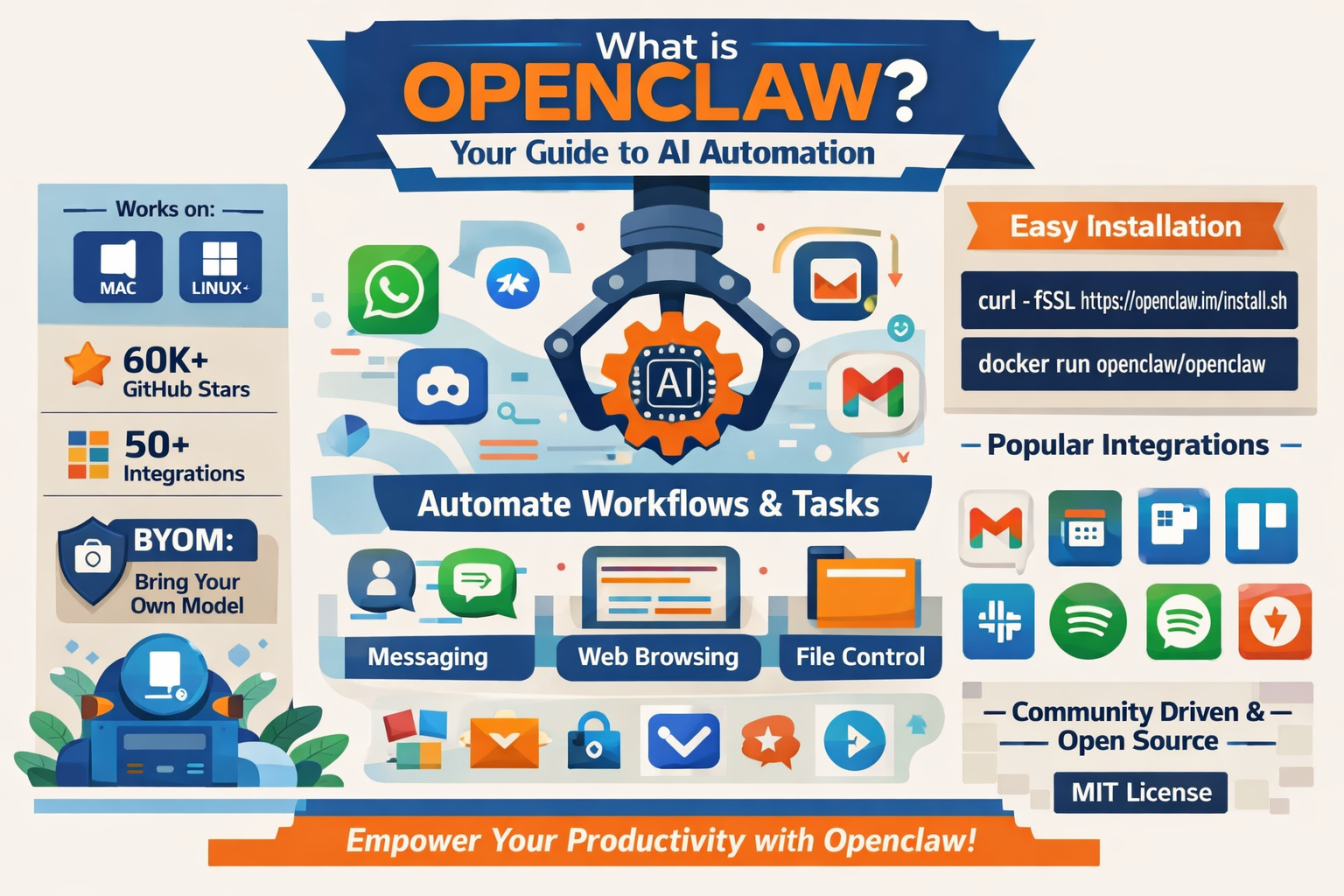
In today’s fast-paced world, the need for efficient automation tools is more significant than ever. So, what is Openclaw? Openclaw is a revolutionary open-source framework designed to empower developers and users alike to create AI-driven automations seamlessly. With over 60,000 stars on GitHub and more than 50 integrations across various platforms, it’s gaining traction rapidly as a versatile tool for enhancing productivity.
Unlocking the Power of Openclaw
Openclaw stands out in the crowded space of automation frameworks. It operates on Mac, Windows, and Linux, making it accessible to a wide range of users. The framework allows for the creation of AI-powered automations that can handle tasks such as routing messages, executing workflows, and integrating with numerous plugins. Notably, it supports major chat platforms including WhatsApp, Telegram, Discord, Slack, Signal, and iMessage.
What makes Openclaw particularly appealing is its BYOM (Bring Your Own Model) architecture, which allows users to utilize local AI models, such as those provided by Ollama, ensuring data privacy and control. As Marcus Johnson, a satisfied user, mentioned, “The self-hosted aspect is huge. My data never leaves my machine. Openclaw with Ollama is a game changer for privacy.” This level of control is an essential feature for many users concerned about data security.
Installation and Setup: Quick and Easy
If you’re wondering how to get started with Openclaw, the installation process is incredibly straightforward. You can quickly install it by running the command:
curl -fsSL https://openclaw.im/install.sh | bashFor those looking to deploy Openclaw in a production environment, using Docker is the way to go. Simply execute:
docker run openclaw/openclawThis simplicity in installation is one of the many factors contributing to Openclaw’s growing popularity. Developers can focus more on building innovative automations rather than getting bogged down by complex setups.
Why Choose Openclaw?
With features like persistent memory to remember user preferences and context, and the ability to browse the web, fill forms, and extract data from any site, Openclaw elevates the standard of automation tools. It also provides full system access, allowing users to read and write files, run shell commands, and execute scripts, giving developers a powerful toolkit to work with.
Where OpenClaw Fits
OpenClaw isn’t aimed at casual users who just want to “automate their inbox.” Instead, it sits in the space where custom automation meets real-world tasks and developer workflows:
- Toolchain automation for dev teams
- Chat-driven task execution
- Cross-platform agent workflows
- Custom integrations with internal systems
In other words: it’s a framework for building automation — not a finished, drop-in product.
Integrations and Community Support
Openclaw boasts over 50 built-in integrations with popular productivity tools such as Gmail, Google Calendar, Notion, Linear, Jira, Todoist, Trello, and even media services like Spotify. This extensive range of integrations allows users to customize their workflows extensively, tailoring them to meet specific needs.
Moreover, the community around Openclaw is thriving, providing support and contributing to its development. As an open-source project licensed under the MIT license, developers are encouraged to create custom plugins in TypeScript, extending the capabilities of Openclaw and fostering a collaborative environment.
Embrace the Future with Openclaw
So, what is Openclaw?
It is a flexible, open-source framework for building AI-driven automations that can adapt to personal, team, and business needs. It offers strong control over models, data, and integrations, making it a solid option for organizations that value customization and ownership.
It is not a “plug-and-play” replacement for traditional automation tools, but rather a foundation for more tailored systems.
If you’re considering using Openclaw and would like help setting it up in a practical, maintainable way—whether for personal workflows or business processes—I provide implementation and consulting services focused on long-term reliability and real-world use.
The goal is not to add more technology, but to make your existing work simpler and more consistent.